

At age 27, I had $500 with no knowledge of investing. This article is for educational purposes only and does not constitute financial advice. Investing involves risk, including the potential loss of principal.
I googled “how to invest money” and was overwhelmed with the jargon, ETFs, mutual funds, dividend yields, and expense ratios.
It actually took me three months to invest that $500. I made some mistakes and lost $80 trying to day trade.
That account is now worth $8600 (including additional contributions) four years later.
This is what I wish someone had told me on day one.
Step 1: Don’t Invest Until You Have These
Before you invest a dollar:
- Pay off high-interest debt. If you have credit cards at 20%+ APR, pay those off first. You can’t reliably earn 20% investing.
- Save a $1,000 emergency fund. Don’t invest if you have $0 in savings because one emergency will cause you to sell your investments at the worst time.
- Have a stable income. Investing is a long-term game, and if you might need the money in 6 months, don’t invest it.
I waited until I had all three to invest my first $500.
My first mistake was trying day trading.
I opened a Robinhood account, bought Tesla stock at $240, and sold it at $228 two weeks later. My loss: $80.
What I did wrong:
- I panicked and sold when it dropped 5%.
- Thought I could time the market.
- Had no strategy.
Lesson learned: I am not smarter than the market. Stop trying to time it.
What Worked: Index Funds
After losing $80, I spent a month educating myself and switched to index funds.
What is an index fund?
Simple answer: A fund that owns a little piece of 500+ companies.
Instead of picking individual stocks (Tesla, Apple, etc.), you buy the WHOLE market.
Example: S&P 500 index fund = you own tiny pieces of Apple, Microsoft, Amazon, Google, and 496 other companies.
Why index funds are good for beginners:
- Built-in diversification (500 companies)
- Lower fees (0.03-0.15% vs 1-2% for managed funds)
- Proven returns (10% average over 100 years)
- Simple (buy and hold)

My actual investing journey (4 years)
Year 1 (age 27):
Starting amount: $500 (after losing $80 day trading)
Strategy: Bought VOO (Vanguard S&P 500 ETF)
Monthly additions: $100/month
End of year value: $1,680 invested → worth $1,790
Gain: +$110 (6.5%)
Year 2 (age 28):
Monthly additions: $150/month (got a raise)
Total invested: $3,480
Account value: $3,890
Gain: +$410 (11.8%)
Year 3 (age 29):
Monthly additions: $200/month
Total invested: $5,880
Account value: $6,720
Gain: +$840 (14.3%)
Year 4 (age 30, current):
Monthly contributions: $200/month
Total contributions: $8,280
Account balance: $9,140
Total profit: +$860 (10.4%)
Annualized profit: 10.75% per year
The Exact Steps to Start Investing
Step 1: Open a Brokerage Account (15 minutes)
I use Fidelity. Others who work:
- Vanguard (best for index funds)
- Charles Schwab (great customer service)
- Fidelity (what I use, good mobile app)
All three:
- $0 to open
- $0 commissions
- Easy mobile app
Avoid: Robinhood (focuses on trading, not long-term investing)
How to open:
- Go to fidelity.com
- Click “Open an Account”
- Choose “Individual Brokerage”
- Provide SSN, address, and employment info.
- Link bank account
- Done in 10-15 minutes
Step 2: Transfer Money (1-3 days)
Link your checking account, and transfer the initial amount. Start with whatever you have: $100, $500, $1,000.
Don’t wait for “more money” – start with what you have.
Step 3: Buy an Index Fund (5 minutes)
My recommendation: VOO or VTI
VOO (Vanguard S&P 500):
- Owns 500 of the largest US companies
- Expense ratio: 0.03% (almost free)
- 10% average return historically
VTI (Vanguard Total Stock Market):
- Owns 3,700+ US companies (more diversified)
- Expense ratio: 0.03%
- Similar returns to VOO
Either one works. I use VOO.
How to buy:
- In the Fidelity app, tap “Trade.”
- Search “VOO”
- Enter dollar amount (e.g., $500)
- Buy, done.
Step 4: Set Up Auto-Invest (10 minutes)
This is the secret. Set automatic transfers + automatic purchases.
My setup:
- Every 1st of the month: $200 auto transfers from checking.
- Every 2nd of the month: $200 auto buys VOO.
I don’t think about it. Money invests automatically. This is called Dollar-Cost Averaging (DCA).
Step 5: Don’t Touch It for Years.
The hardest part is doing NOTHING.
Market drops 10%? Don’t sell.
Is the market up 20%? Don’t sell.
Just keep auto-investing.
I checked my account obsessively for the first 6 months. Now I check it quarterly.
Understanding the Risks of Investing
While index funds have historically delivered strong long-term returns, investing always involves risk. Market values fluctuate daily, and short-term losses are normal. There is no guarantee of future returns, and investors should consider their financial situation, risk tolerance, and time horizon before investing.

Common Beginner Questions:
How much should I start with?
Whatever you can afford. I started with $500. Some people start with $50. That’s fine.
What’s a realistic return?
S&P 500 averages about 10% over the long term (decades).
Some years: +30%. Some years: -20%. Over 20 years, it averages 10%.
When can I withdraw?
Anytime, but shouldn’t be for 5-10+ years. This is long-term money, not an emergency fund.
What about taxes?
Only when you sell (capital gains tax). If you hold, no taxes until sale. In retirement accounts (Roth IRA), no taxes ever.
What? If the market crashes?
Just keep buying. Historically, broad market indexes have recovered over long periods, though past performance does not guarantee future results. Market downturns have historically been followed by recoveries, but future performance is never guaranteed. Roth IRA vs Regular Brokerage: I use both.
Compound interest only works when money is invested.
Roth IRA vs Regular Brokerage
I use both.
Roth IRA (retirement account):
Advantages:
- Tax-free growth forever
- Tax-free withdrawals in retirement
- Best long-term account
Disadvantages:
- Can only contribute $7,000/year (2026 limit)
- Can’t withdraw earnings before 59.5 without penalty
Regular Brokerage:
Advantages:
- No contribution limits
- Can withdraw anytime
- More flexible
Disadvantages:
- Pay capital gains tax when you sell
My strategy:
- Max Roth IRA first ($583/month)
- Extra money → regular brokerage
Mistakes to Avoid
- Trying to pick individual stocks
95% of professionals can’t beat index funds long-term.
You probably can’t either. Just buy the index.
- Panic selling when the market drops
The market dropped 30% in March 2020 (COVID).
People who sold: Lost money.
People who held: Recovered + gained.
- Waiting for “perfect time” to invest
The best time was 10 years ago.
Second best: Today.
Don’t wait.
- Investing money you’ll need soon
Only invest money you won’t need for 5+ years.
Emergency fund stays in a savings account.
- Checking account every day
Daily checking = emotional decisions.
Check quarterly max.
My Current Portfolio (Simple)
Roth IRA ($4,200):
- 100% VOO
Regular Brokerage ($4,940):
- 80% VOO
- 20% VTI
Total: $9,140
That’s it. Two index funds. No individual stocks. No crypto. Simple.
What If I Only Have $50/Month?
Invest it.
$50/month at 10% for 30 years = $113,000
Better than $0/month = $0
Think of it this way: start small and increase when you can.
The Bottom Line
How to invest money (simple version):
- Open an account with Fidelity/Vanguard/Schwab
- Buy VOO or VTI
- Set up auto-invest for a monthly contribution
- Don’t touch it for decades
- Over time, consistent investing can significantly increase long-term wealth, though results are never guaranteed.
I started with $500 when I was 27. Four years later, it grew to $9,140. Not life-changing yet. Assuming an average annual return similar to historical market performance, long-term projections could potentially reach several hundred thousand dollars over multiple decades. However, actual returns will vary. Doing this takes compound interest, time, and consistency.
And that’s it. Stop overthinking. Just start.
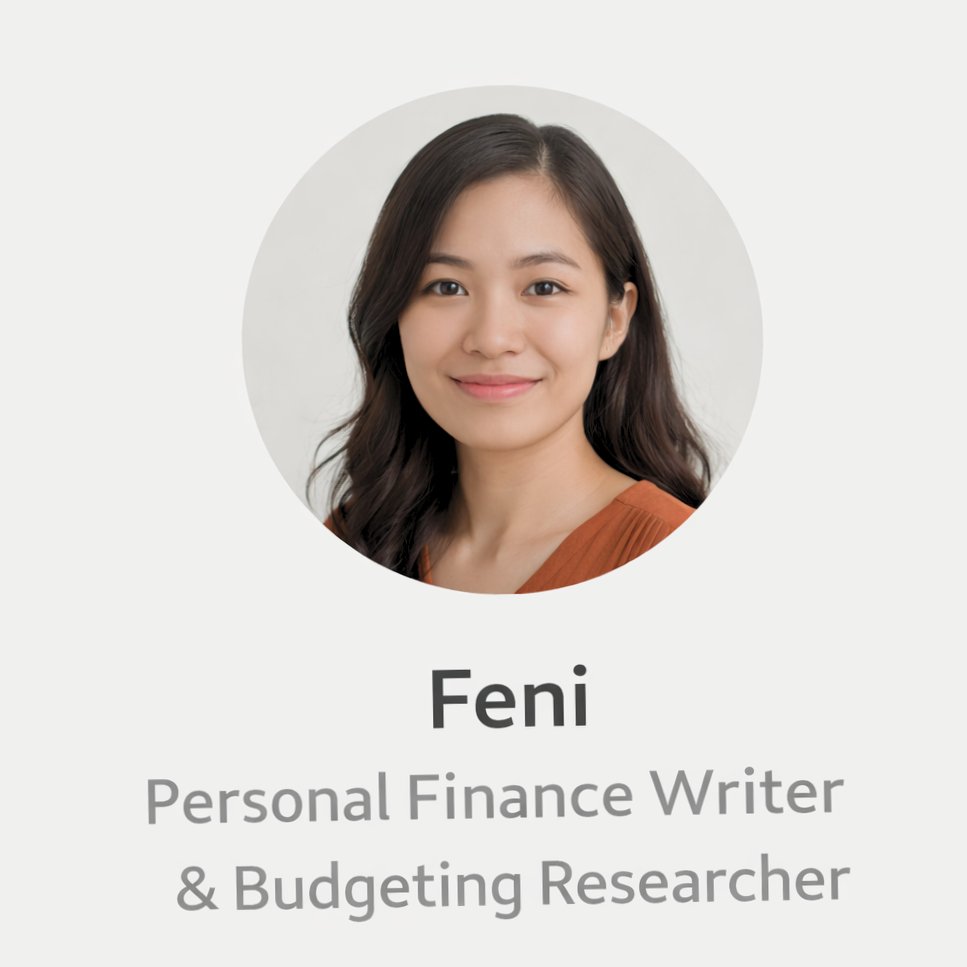
Feni. Personal Finance Writer & Budgeting Researcher
Feni focuses on practical budgeting systems, debt reduction strategies, and long-term financial stability. Her work combines real-life experience with research-based financial principles to create sustainable money habits rather than quick-fix solutions.
At ThriftVine, she shares structured, accessible guidance to help individuals build stronger financial foundations and make informed financial decisions.
The information shared on this website is for educational purposes only and should not be considered financial advice. Visit the About the Author page for more information.